I’m Dr. Lisa Godfrey, and I’m excited to share my expert perspective on the why and the when of spaying and neutering for your beloved pets.
What Spaying and Neutering Means
The decision to spay or neuter is a significant one, and I’m here to synthesize the current research and address your most pressing questions.
- Who Should Be Desexed: Any dog or cat, male or female, that is not a good candidate for breeding. This includes pets with genetic, conformational, or temperamental flaws that would be remedied by the procedure. Essentially, if a pet would not contribute to the overall betterment of the species, it probably needs to be spayed or neutered.
- The Procedure: It is the surgical removal of reproductive organs under general anesthesia.
- For a female (spaying), this removes the ovaries and the uterus.
- For a male (neutering), this removes the testicles.
When is the Right Time?
The optimal timing is variable and depends on the individual pet.
- Shelter/Rescue Animals: These procedures should be done as soon as it is safe to put them under anesthesia. Shelters often perform the surgery as early as six to eight weeks to ensure sterilization before adoption.
- General/Smaller Breed Pets: These dogs can typically be done sometime between six and nine months old with no lasting effect, as their growth plates close younger.
- Large and Giant Breed Dogs: It can be a good idea to wait until they are skeletally mature. Neutering before maturity can delay the closing of growth plates, causing longer long bones. This alteration in leg joint angles might make them more susceptible to injuries like ACL ruptures, especially in working dogs.
- Male Cats: I strongly recommend neutering male cats before they reach maturity to prevent bad habits like spraying, as the urine smell of an intact male cat is horrific and the habit is hard to break once started.
- Older Pets: Age alone does not prevent the surgery. As long as your pet is otherwise healthy, the medical benefit often outweighs leaving them intact. We weigh the risk versus the benefit on a case-by-case basis.
Why I Recommend Spaying and Neutering
I am a medical professional, so eliminating physical illnesses is probably the most important reason for me, but the benefits are numerous.
- Medical Benefits:
- Females: Prevents pyometra (a common and serious uterine infection). Removing the ovaries and uterus around 6–9 months of age virtually eliminates the risk of mammary tumors later in life.
- Males: Prevents testicular tumors. It causes the prostate to shrink, thus preventing prostatic disease, which causes difficulty or straining during urination. It prevents cellular mutation and tumor formation in cases of cryptorchidism (undescended testicles).
- Convenience and Behavior:
- Cats: For female cats, it stops the screaming, rolling, and crying associated with being in heat. For male cats, it greatly improves behavior by reducing fighting and urine spraying.
- Dogs: For females, it eliminates the messiness and discharge of being in season twice a year and prevents male dogs from being attracted to your yard.
- Training Focus: In my opinion, removing the hormonal challenges helps pets become more focused on pleasing you rather than their own agenda. I would say it changes their focus “from girls to their owner”.
- Population Control: The sheer volume of mixed-breed animals without responsible homes, especially in the South, is a serious overpopulation problem that we must address.

The Procedure and Post-Op Care
For the safety of the patient, the procedure must be done under general anesthesia.
- Pre-Surgery:
- I recommend blood work, especially for older pets, to help us determine the best anesthetic protocol.
- However, I feel comfortable proceeding with short-duration anesthesia without blood work if the owner understands the slight risk and I don’t identify any immediate problems.
- Surgery:
- Spay (Dogs & Cats): We make an incision down the middle of the belly, ligate everything, and remove the ovaries and uterus. We often place a small tattoo near the closure to indicate the pet has been spayed.
- Neuter (Dogs): An incision is made in front of the scrotum to remove the testicles. For very large dogs, we may perform a scrotal ablation (removing the whole scrotum) to prevent swelling.
- Neuter (Cats): Usually done through two small incisions on the scrotum, often without skin sutures. They generally recover quickly.
- Aftercare:
- Pain Management: I always send home adequate pain medication. If your pet seems extra painful or if the sedative makes them too sleepy to eat, call us to adjust the dose.
- Activity Restriction: We usually need strict confinement for about three to five days.
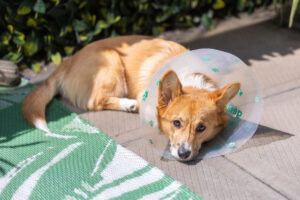
- Licking Prevention: The use of an E-collar (cone) is really good because dogs and female cats like to lick their incisions. Surgical suits can also be used, but ensure they fit beforehand.
Expectations After Surgery
- Weight Gain: This is a common worry, but weight gain occurs when more calories are consumed than needed. Metabolism does slow down a little bit, but we can prevent weight gain by reducing calories (less fat/more fiber) and ensuring they get exercise. They don’t have to become “a big fat blob laying on the couch”.
- Behavioral Changes: Most changes are very positive.
- The dog’s marking territory may become distractible and more trainable.
- Male cat spraying will decrease.
- It takes about six to eight weeks for the sexual hormones to leave the system and for the behavioral effects to fully set in.
Addressing Specific Concerns
- Anesthesia for French Bulldogs: Nearly all French Bulldogs need BOAS (Brachycephalic Obstructive Airway Syndrome) surgery due to their confirmation. If you want to neuter an adult French Bulldog, I would not be afraid, provided the surgeon uses short-acting anesthetic and ensures they stay intubated long enough to fully control their airway.
- Spaying a Cat in Heat: I do not find that an in-heat cat poses a significantly higher risk than a dog. The tract is a little more swollen, so we are a little more careful with our knot ties, but we do them all the time.
- Post-Op Feeding: I advise sticking to the same food they usually eat. If they aren’t eating much for 48 hours because they are sleepy or uncomfortable, that’s generally fine, but they must drink water. Do not introduce rich human foods, as this will lead to vomiting and diarrhea, and complicate recovery.
- Ovary Sparing Spay (Europe vs. US): In my opinion, leaving the ovaries does not solve any problem other than reproduction and pyometra. You still have a dog cycling, still attracting males, and still have the same risk of mammary cancer and potentially stump pyometra. I don’t see any reason to leave them.
I am always happy to help with any questions about your pet’s health. Feel free to call and talk to your veterinarian about any concerns.