Why is My Puppy Scratching?
-
Growth Spurts: A puppy’s skin stretches as they grow rapidly, which can cause mild itching and dryness.
-
Allergies: Both food (beef, dairy, chicken) and environmental (pollen, dust) allergens are incredibly common culprits.
-
Flea Bite Dermatitis: It only takes one flea bite to cause weeks of severe allergic itching.
-
Masking the Problem: Steroids and antihistamines offer temporary relief but do not cure the root cause of an itchy puppy.
-
Nutrition Matters: Omega-3 fatty acids are essential for healthy skin and a shiny coat.
I Have an Itch that Needs Scratching: How to Help Your Itchy Puppy
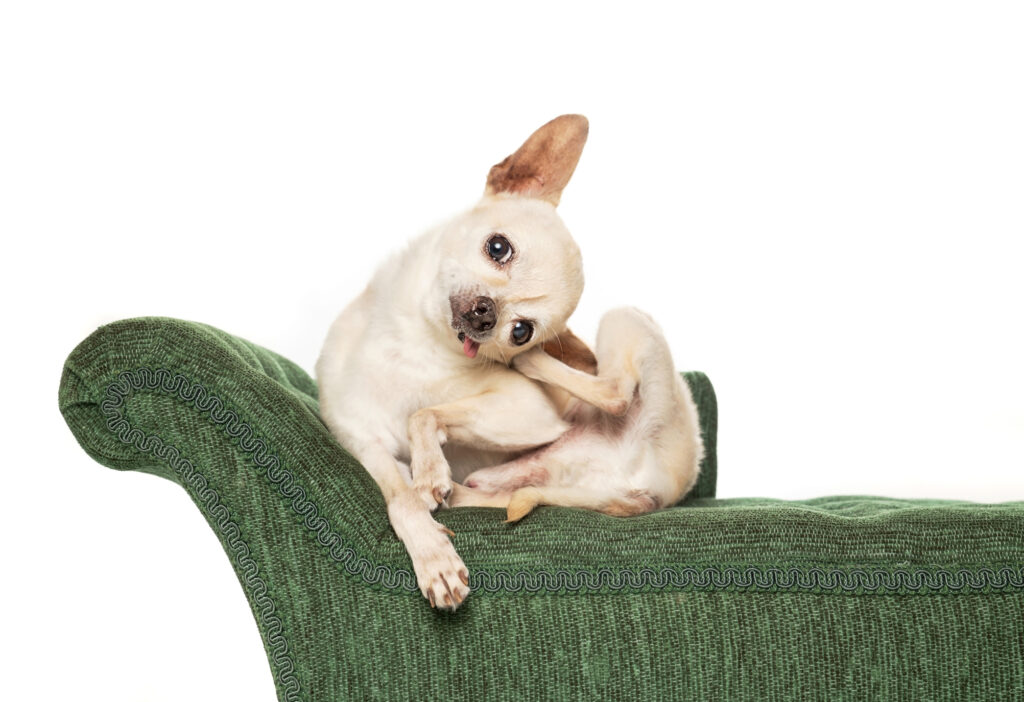
Watching your new best friend constantly scratch, bite, and lick themselves can be incredibly frustrating and heartbreaking. You want them to be comfortable, but unfortunately, the list of possible reasons for an itchy puppy is practically endless.
However, before you panic, it helps to understand the biology of a growing dog. Here at Hollywood Feed, we see itchy pups every day. Below, we have broken down the three most common causes of puppy itching and what you can do to bring your furry friend some relief.
1. Growing Pains and Puppy Acne
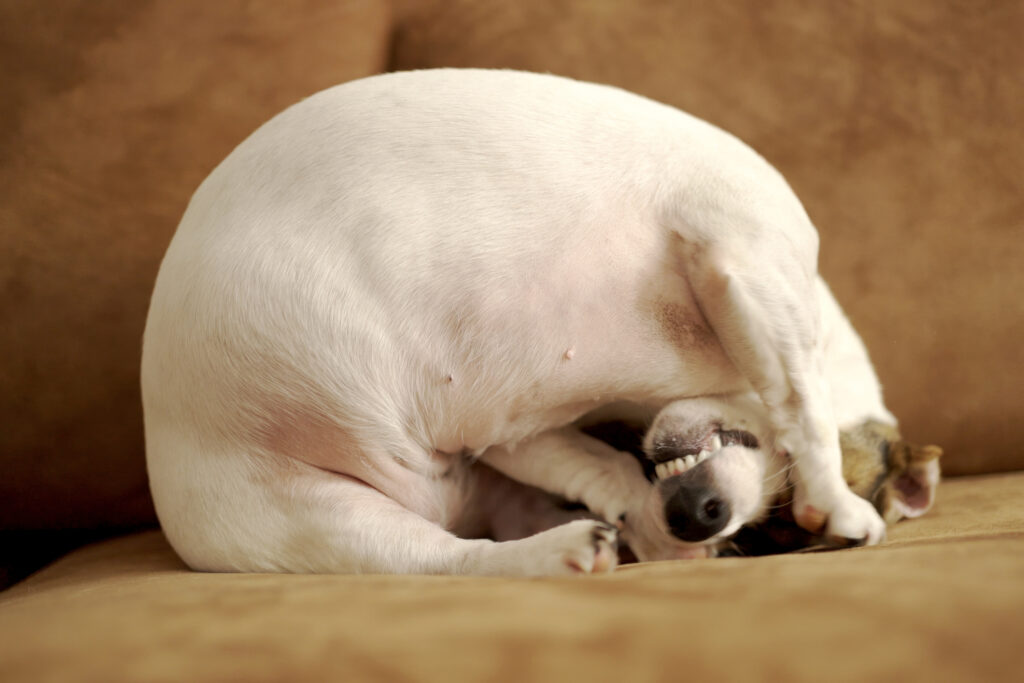
Puppies do a massive amount of growing in their first year. As they rapidly pack on muscle and bone, their skin has to stretch constantly to accommodate that growth. To some degree, this stretching or even general puppy acne could be the simple reason you have an itchy puppy.
The Omega-3 Solution
If growth is the primary culprit, nourishing the skin from the inside out is your best defense. Feeding a diet high in omega-3 fatty acids (like fish or duck formulas) helps significantly condition the skin and improve elasticity.
Beyond soothing an itchy puppy, omega-3s offer a host of other health benefits:
-
Reduces systemic inflammation.
-
Helps to maintain healthy hips and joints.
-
Contains high levels of DHA, which helps puppies learn and supports cognitive development (and may even prevent senility in older dogs later in life).
2. Food and Environmental Allergies
Your pup could be suffering from a food allergy, an environmental allergy, or a frustrating combination of both. Unfortunately, it is notoriously difficult to determine exactly what allergen is causing the issue, as commercial allergy tests for dogs are often fairly inaccurate.
Identifying Common Culprits
If you can eliminate the most common offenders, you might see a drastic reduction in scratching.
-
Food Allergies: The most common dietary triggers are beef, dairy, chicken, wheat, soy, and corn. Try switching to a limited-ingredient diet that doesn’t contain any of these items.
-
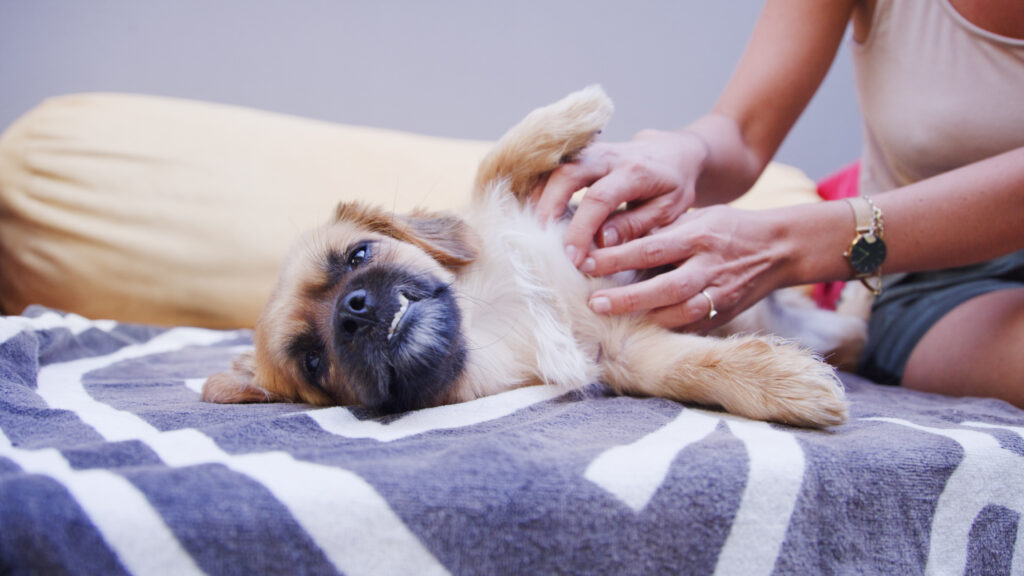
Environmental Allergies: Dust mites, pollen, and grass can easily irritate a puppy’s bare belly.
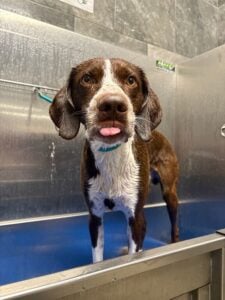
Pro Tip: To combat environmental triggers, try bathing your dog in a soothing, medicated pet shampoo to physically wash the allergens off their skin.
3. Flea Bite Dermatitis

Another—and probably the most common—cause of severe itching in dogs and cats is flea bite dermatitis.
You might be thinking, “But my house is clean, and I don’t see any fleas on my dog!” Here is the hard truth: all it takes is one single flea bite to trigger an allergic reaction that can make an animal suffer for weeks.
Choosing the Right Preventative
If you have an itchy puppy with flea bite sensitivity, the type of preventative you use matters immensely.
-
Oral Medications: Many oral (and some topical) medications only kill fleas after they have already bitten your pet and ingested the chemical circulating in their bloodstream. For a dog with a flea allergy, the damage is already done.
-
Repellent Topicals: It helps tremendously to use a topical flea preventative that actively repels and kills fleas just through contact. Products like Advantix II (safe for pups seven weeks and older)
Also try, Elanco Seresto Flea & Tick Collar premium flea & tick protection for dogs & puppies without the price tag
The Truth About Antihistamines and Steroids
When your puppy is miserable, it is tempting to ask your vet for a quick fix like a steroid shot or an antihistamine. While these medications may help a pet with severely itchy skin get some temporary relief, remember that they can have both short- and long-term side effects.
More importantly, they only cover up your pet’s problem. They will never resolve the issue completely or permanently, and long-term use may even exacerbate the issue by suppressing your pet’s immune system.
Next Steps: Let Us Help!
No one can say with 100% certainty that tweaking their diet or upgrading their flea preventative will instantly solve your puppy’s itchy skin, but these steps are highly effective starting points. They certainly won’t hurt!
If you are struggling with an itchy puppy, try adding a Skin and Coat Supplement to their routine to combat the dryness.
If possible, bring your pup into your local Hollywood Feed store! We genuinely enjoy meeting our clients and watching your dogs grow. A face-to-face meeting might help us determine what exactly is going on with your pet’s coat. Bring in any food or treats you might be feeding as well; we’ll gladly check the ingredient panels for anything that stands out as a potential problem. Sometimes we end up suggesting that you take your pet to a veterinarian, but very often, we can help you find a nutritional solution right in the store.
Recap: Helping Your Itchy Puppy
-
Skin Stretching: Rapid growth causes skin to stretch; feed Omega-3s to improve elasticity.
-
Allergens: Eliminate common food triggers like chicken, beef, corn, and wheat.
-
Bath Time: Wash away pollen and dust with a soothing oatmeal shampoo.
-
Flea Allergies: Use a contact-kill preventative (like Advantix II) so fleas die before they bite.
-
Avoid Quick Fixes: Steroids mask the itch but don’t cure the underlying cause.
Frequently Asked Questions (FAQ)
Can I give my itchy puppy human antihistamines like Benadryl? While some human antihistamines are safe for dogs in specific, vet-prescribed dosages, they often only provide very mild, temporary relief and can make your puppy incredibly drowsy. Always consult your vet before giving human medications, and focus on fixing the root cause of the itch rather than just masking it.
How long does it take for an Omega-3 supplement to help my puppy’s skin? Because skin cells take time to turn over and regenerate, it typically takes about 4 to 6 weeks of consistent Omega-3 supplementation to see a noticeable difference in your puppy’s skin and coat.
Are grain-free diets better for an itchy puppy? Not necessarily. While wheat and corn can be allergens for some dogs, protein allergies (like chicken or beef) are actually much more common than grain allergies! If you suspect a food allergy, it is usually better to switch the protein source (e.g., from chicken to lamb or duck) rather than just removing grains.
Why does my puppy only scratch at the base of their tail? Intense scratching or biting specifically at the base of the tail, right above the hind legs, is the classic, hallmark sign of Flea Bite Dermatitis. Even if you don’t see fleas, this specific location almost always points to a flea allergy.
Follow our blog for more expert pet care tips, and remember that you can get your itchy puppy’s supplements, soothing shampoos, and limited-ingredient foods fast with Hollywood Feed’s convenient Same Day Delivery and Curbside Pick-Up!