
Nurturing a newborn puppy or kitten is one of the most rewarding experiences a pet owner or caregiver can have, but it can also feel overwhelming. The first 8 weeks of a pet’s life are critical; during this time, they build bone, brain, and immune architecture at a rapid pace. A nutritional deficit during this early window can lead to lifelong health issues.
Whether you are supporting a mother-raised litter or hand-rearing orphans, here is a complete guide to navigating neonate nutrition safely—from birth all the way to independent eating.
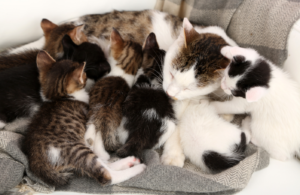
THE 4-STAGE FRAMEWORK: FROM BIRTH TO BOWL
Navigating early pet nutrition is easier when you break it down into four distinct phases:
- Birth (Days 0–3): Newborns rely 100% on colostrum and mother’s milk to build immediate immunity and critical energy reserves.
- Milk Replacer Stage (Birth to 3–4 Weeks): When mother’s milk is unavailable, high-quality, species-specific milk replacer provides total nutrition.
- The Weaning Stage (3–4 Weeks to 8 Weeks): A gradual transition introducing solid food mixed with milk replacer or water.
- Independent Eating (8+ Weeks): The pet transitions fully to solid canned or dry food suited for growth.
WHAT NEWBORNS NEED: THE SCIENCE
A newborn pet’s nutritional requirements are vast compared to their tiny size:
- Energy: A newborn’s energy requirements are roughly double what an adult animal needs on a weight-by-weight basis. Caloric needs quickly ramp up from 15 kcal per 100g of body weight in the first few days to 20–25 kcal/100g by day six.
- Protein & Amino Acids: Growth requires robust protein. Kittens, in particular, are obligate carnivores and require specific essential amino acids like taurine and arginine to avoid severe heart and vision issues.
- Essential Fats: Fats provide a concentrated energy source and carry vital fatty acids such as DHA and EPA, which are essential for brain, cognitive, and retinal development.
- Carbohydrates: In the first 4 weeks, lactose is virtually the only carbohydrate a neonate’s underdeveloped digestive tract can break down efficiently.
- Hydration: Newborn bodies consist of up to 79% water. Proper hydration is essential and should never be treated as an afterthought.
PUPPIES AND KITTENS ARE NOT INTERCHANGEABLE
It is critical never to swap canine and feline milk replacers.
PUPPY REQUIREMENTS:
- Minimum Protein (AAFCO): 22.5%
- Signature Nutrients: Balanced essential amino acid profile
- Energy Multiplier: 3x Resting Energy Requirement (RER)

KITTEN REQUIREMENTS:
- Minimum Protein (AAFCO): 30%
- Signature Nutrients: Mandatory Taurine, Arginine, & Arachidonic Acid
- Energy Multiplier: 2.5x RER (or free-choice after weaning)

Why Cow’s or Goat’s Milk Fails: Retail cow’s and goat’s milk lack the fat, protein, and micro-nutrients required by puppies and kittens, and they often cause severe digestive upset or diarrhea. Avoid homemade formula recipes as well, as inconsistent batch composition can lead to fatal nutrient deficiencies. Always choose a commercially prepared, species-specific milk replacer labeled “complete and balanced” for growth.
MASTERING THE MILK REPLACER STAGE (WEEKS 0–4)
Feeding orphaned or supplemental neonates requires careful technique:
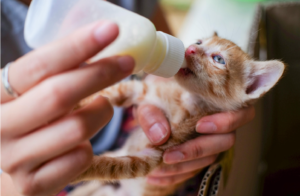
- Proper Position: Always hold the neonate horizontally in a natural, belly-down position (as if nursing from the mother). Never feed a puppy or kitten on its back, as formula can enter the lungs and cause fatal aspiration pneumonia.
- Check Nipple Flow: Invert the bottle; formula should drip slowly—about one drop at a time. A fast stream will overwhelm the baby’s airway.
- Formula Temperature: Warm formula to around 100°F (38°C) to match body temperature. Cold formula causes severe hypothermia and digestive distress because neonates cannot regulate their own body temperature.
- Never Force Feed: Allow the baby to suckle at its own pace and stop when full. Tube feeding should only be performed by experienced caregivers under direct veterinary guidance.
Feeding Schedule & Weight Tracking: Feed neonates every 2–4 hours around the clock for the first few days, extending to every 4–6 hours after day six.
The Scale Does Not Lie: Weigh each neonate daily on a gram scale at the exact same time.
- Puppies should double their birth weight by the end of week 1 and gain 5–10% of their body weight daily.
- Kittens should gain 10–30 grams (0.35–1 oz) daily, totaling roughly 4 oz per week.
THE WEANING STAGE (WEEKS 3–8)
Weaning is a gradual hand-off, not a sudden switch. Look for signs of readiness such as steady walking, emerging teeth, and curiosity toward food bowls.
The 3-Step Weaning Process:
Step 1: Gruel (Weeks 3–4): Blend 2 parts canned growth food with 1 part warm milk replacer or water to create an oatmeal-like consistency.
Step 2: Moistened Kibble (Weeks 4–6): Combine 1 part dry food with 3 parts warm water or milk replacer, gradually reducing liquid as teeth emerge. Always keep a shallow bowl of clean water nearby.
Step 3: Solid Food (Weeks 6–8): Transition fully to high-quality canned or dry food formulated for growth.
Daily Rhythm: Offer weaning meals for 30 minutes 4 times a day, discarding any leftovers afterward to keep food fresh and free of bacteria.
RED FLAGS: WHEN TO CALL THE VET IMMEDIATELY
Neonate health can decline rapidly. Do not “wait and see” if you notice any of the following symptoms:
- No weight gain or any weight loss over a 24-hour window
- Persistent crying, unusual lethargy, or refusal to nurse
- Diarrhea, vomiting, or a swollen, tense abdomen
- Body feeling cold to the touch
- Missing expected developmental milestones for their age
By following these scientific guidelines and maintaining a structured routine, you give your young pets the strongest possible foundation for a long, healthy life!