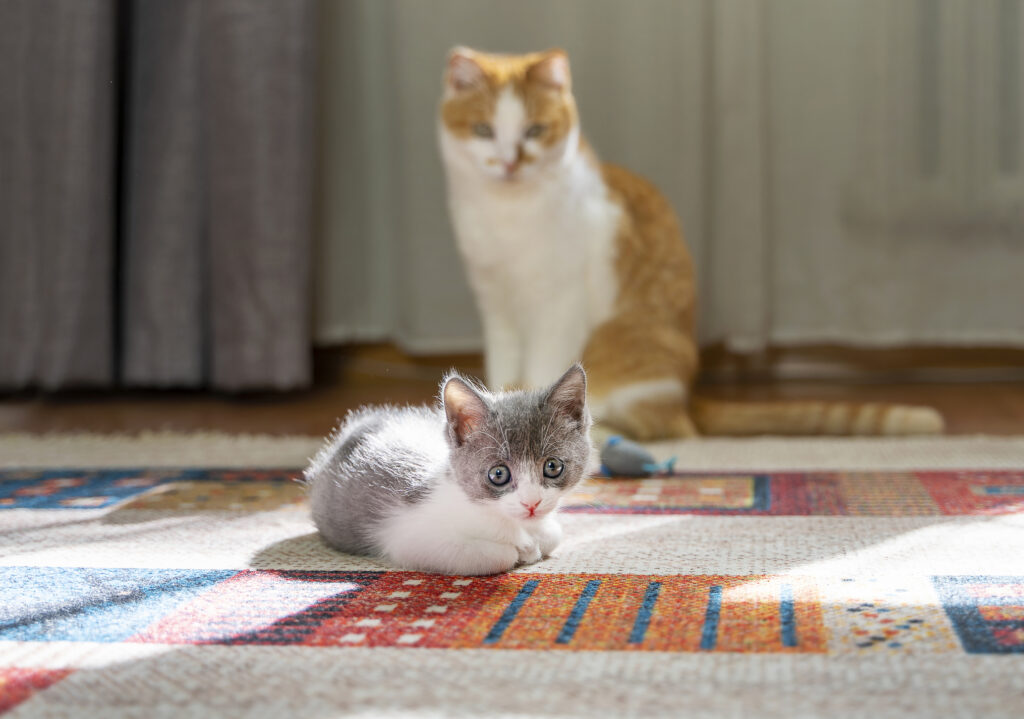
A Harmonious Home
-
Patience is Key: Never rush the process. A slow, staged introduction prevents territorial aggression and sets the foundation for a lifelong bond.
-
Create a Safe Room: Keep the new kitten completely isolated in a dedicated room for the first few days to let both cats adjust to the environmental shift.
-
Swap Scents First: Cats communicate heavily through smell. Allow them to investigate each other’s bedding before they ever see each other face-to-face.
-
Use Positive Reinforcement: Use high-value treats, wet food, and interactive wand toys to create positive associations during their supervised meet-and-greets.
Paws and Patience: A Guide to Introducing an Adult Cat to a New Kitten
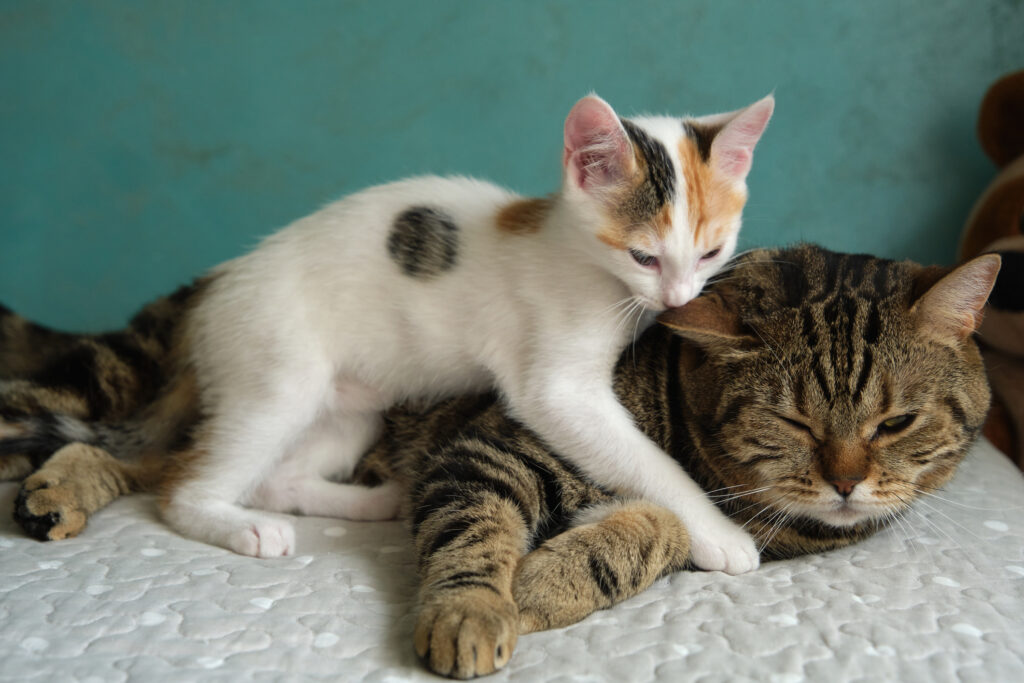
Bringing home a tiny, playful kitten is incredibly exciting. It is easy to envision your resident feline immediately cuddling up with the new baby and playing together for hours. However, cats are inherently territorial creatures of habit. To your resident adult cat, this adorable new kitten is not a sudden best friend—they are an unpredictable intruder!
If you want to ensure a peaceful household, introducing an adult cat to a new kitten requires a slow, carefully managed process. Throwing them into a room together and hoping they “work it out” is a recipe for immense stress and long-term behavioral issues.
Fortunately, by following a few expert steps, you can help both of your feline family members feel secure, confident, and ready to share their territory. Here is your step-by-step guide to introducing an adult cat to a new kitten!
Step 1: Set Up a Kitten Safe Room
Before you even bring the new kitten through the front door, you need to establish a dedicated “basecamp.” Choose a quiet room with a door that closes securely, such as a guest bedroom or a bathroom.
Equip this safe room with everything the kitten needs: a litter box, food and water bowls, a cozy bed, a scratching post, and plenty of toys. When you arrive home, take the kitten directly to this room.
This separation serves two vital purposes. First, it gives the easily overwhelmed kitten a small, safe space to decompress and get used to the smells and sounds of their new house. Second, it allows your resident adult cat to realize there is an intruder in the house without feeling like their entire territory has been invaded.
Step 2: The Scent Swap
Because cats rely heavily on their sense of smell to understand their world, the first phase of introducing an adult cat to a new kitten should be completely invisible.
After a day or two, take a blanket or a soft bed that the kitten has been sleeping on and place it in the living room for your adult cat to investigate. Take a blanket belonging to your adult cat and place it in the kitten’s safe room. Reward both cats with high-value treats when they smell the new items. You want them to associate the scent of the other cat with delicious rewards!
Next, you can start feeding both cats their meals on opposite sides of the closed safe room door. Start with the bowls a few feet away from the door, and gradually move them closer each day. This teaches them that the smell and sound of the other cat mean good things are happening.
Step 3: Visual Introductions
Once both cats are eating comfortably on opposite sides of the closed door without hissing or growling, it is time for a visual introduction.
Do not just open the door and let them mingle. Instead, use a physical barrier. A tall baby gate or a door cracked open just an inch (secured so it cannot be pushed open) works perfectly. Allow them to see each other while you offer their favorite wet food or treats. Keep these sessions very short—just three to five minutes to start.
If either cat hisses, growls, or swats, calmly close the door and try again the next day. You always want to end the visual introduction on a positive note, before either cat gets stressed.
Step 4: Supervised Face-to-Face Meetings
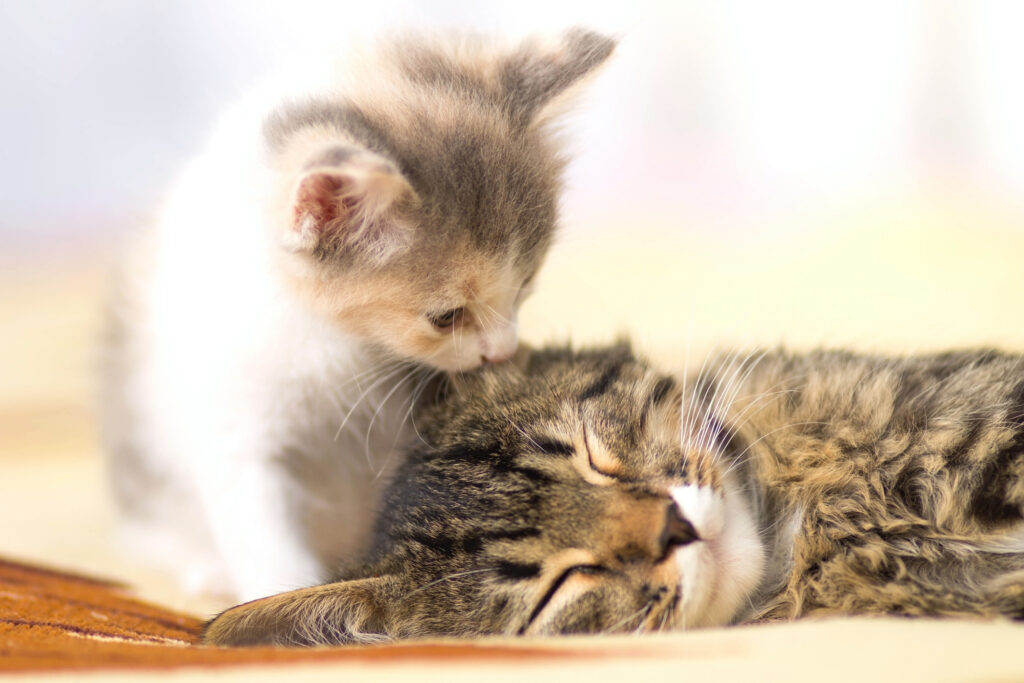
When the visual barrier sessions are going smoothly, you can finally remove the gate. The secret to this final stage of introducing an adult cat to a new kitten is distraction.
Have an engaging wand toy or a handful of premium treats ready. When the kitten comes out of the room, immediately engage both cats in play or toss them treats on opposite sides of the room. You want their focus to be on the fun activity, not solely on staring each other down.
Keep these sessions brief at first, slowly increasing the duration over several days or weeks. Never leave them entirely alone until you are 100% confident that they are comfortable with one another.
Recap: Steps for Feline Friendship
-
Isolate First: Keep the new kitten in a closed-off safe room with their own food, water, and litter box for at least the first few days.
-
Exchange Scents: Swap blankets and toys between the two cats so they can get used to each other’s smell without visual stress.
-
Dine Together: Feed the cats on opposite sides of a closed door to build a positive association with the other cat’s presence.
-
Use a Barrier: Utilize a baby gate for safe, controlled visual introductions before allowing full physical access.
-
Supervise Play: Use interactive toys and high-value treats to distract and reward both cats during their first face-to-face interactions.
Frequently Asked Questions (FAQ)
How long does introducing an adult cat to a new kitten usually take? Every cat is different! For highly social cats, the process might only take a week. For older, more territorial cats who have lived alone their entire lives, it can take a month or more. Move at the pace of the most hesitant cat.
Is it normal for my adult cat to hiss at the kitten? Yes, hissing and a few warning swats are completely normal forms of feline communication. Your adult cat is simply setting boundaries and telling the energetic kitten to back off. As long as there is no aggressive stalking, fur flying, or loud yowling, you do not need to immediately intervene.
How do I know when it is safe to leave them alone together? You can safely leave them unsupervised when they can confidently share a room without tension. Look for positive body language: relaxing, sleeping near each other, eating side-by-side without hesitation, or engaging in mutual grooming. Until you see these signs, separate them when you leave the house.
Are you preparing to expand your feline family? To make the process a breeze, visit your local Hollywood Feed to stock up on tall gates, high-value training treats, and interactive wand toys to help ease the transition. Take advantage of our convenient Same Day Delivery or Curbside Pick-Up to get all your new kitten essentials without having to leave them alone on their first day home! Be sure to check out our blog for more expert pet care tips, behavioral guides, and everything you need to navigate pet parenthood.